The rest of this article is available to members only.
Create a free account to read the full article.
Advances in X-ray Diffraction Analysis with Machine Learning Techniques
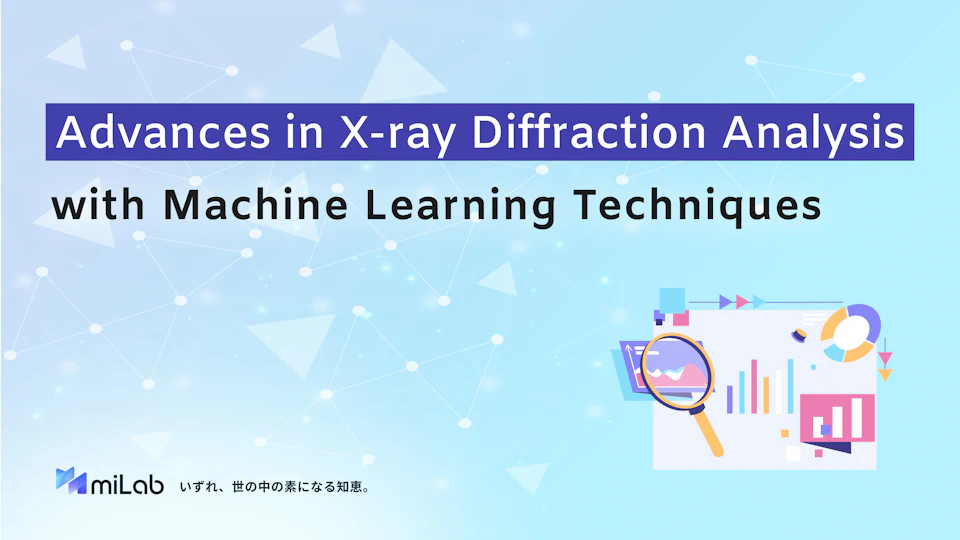
This article reviews the evolution of X-ray diffraction (XRD) analysis, from traditional methods to modern machine learning approaches. Traditional techniques, such as Rietveld refinement and Search/Match Libraries, are compared with four emerging ML architectures: Convolutional Neural Networks (CNN), Transformer Encoders, CNN-MLP hybrids, and Variational Autoencoders (VAE). Each of these approaches offers distinct advantages for addressing contemporary challenges in XRD analysis, including handling peak complexity in multi-phase samples, processing large volumes of data, managing experimental artifacts, and facilitating dynamic analysis. A comparative evaluation of these methods is conducted based on processing speed, multi-phase capability, interpretability, and scalability.

Chaiyanut Jirayupat
MI-6 Ltd.Data Scientist
In Bachelor's and Master's studies, I specialized in nano-material analysis using techniques such as XRD, Raman, XPS, EDS, and sensor data processing. For my Doctoral degree, I integrated machine learning to extract features from human breath and artificial olfactory systems, utilizing GC-MS spectrum and gas sensor data at the University of Tokyo and Kyushu University. Currently employed as a data scientist at MI-6, I am focusing on the development of an automated platform for extracting features from spectral data.